


Food packaging is a discipline that rarely receives the credit it deserves, until it fails, at which point the consequences appear quickly in spoiled product, returned orders, and reputational damage that takes far longer to repair than it did to build.
What Good Packaging Actually Achieves
The primary purpose of food packaging is protection. A well-engineered container shields its contents from contamination, moisture, oxygen, light, and physical damage during handling, transport, and storage. Secondary purposes follow from there: portion control, tamper evidence, labelling space, and the presentation that influences how a consumer perceives the product inside before they open it.
In commercial food operations, packaging also carries regulatory obligations. Containers that come into direct contact with food must comply with food safety standards that govern material composition, additive limits, and migration thresholds. These are not administrative formalities – they represent the chemical boundary between packaging material and the food that absorbs whatever migrates through that boundary.
The Main Packaging Formats and Their Uses
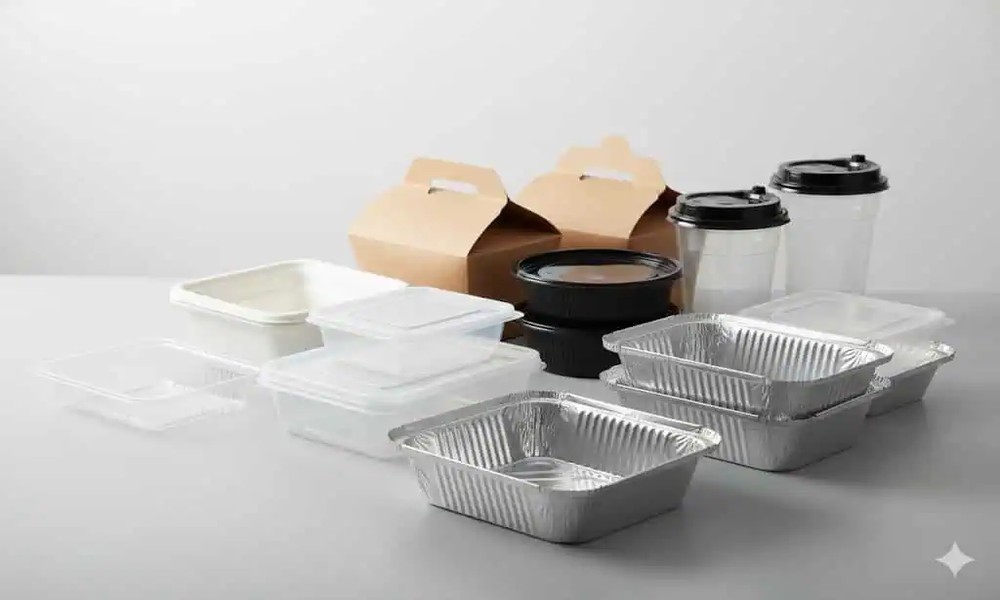
The range of food packaging formats available to caterers, food manufacturers, and retailers is broad:
- Sealed trays: ideal for ready-to-eat meals, chilled products, and catering portions that will be reheated before serving
- Clamshell containers: hinged single-piece containers commonly used for sandwiches, pastries, salads, and takeaway items
- Round containers with snap-fit lids: versatile for soups, rice dishes, desserts, and wet food products
- Flat-lid containers: used for salads, cold cuts, and products displayed through a transparent lid
- Film-wrapped trays: typically used in supermarket fresh food sections for produce, meat, and prepared meals
Each format influences how the food behaves during transport, how easy it is to serve or consume, and how well it maintains temperature and texture between preparation and consumption.
Matching Material to Food Type
Not all materials suit all food types. The relationship between packaging material and food content must be considered carefully:
- Hot foods require containers rated for the temperature they will hold, without warping or releasing compounds into the food
- Oily or acidic foods interact differently with packaging surfaces than neutral or dry foods
- Foods with high moisture content need containers with adequate ventilation or moisture-barrier properties, depending on whether you are trying to retain steam or prevent sogginess
Food packaging solutions that are specified correctly for their intended use protect the food, maintain appearance during transport, and ensure the end consumer receives the product in the condition it was intended to be received.
Professional Presentation in Food Service
In the food service industry, packaging is part of the brand experience. When a customer collects a meal, opens a catering box, or receives a delivered food order, the packaging communicates something about the business that prepared it. Inconsistent, flimsy, or visually unappealing containers undermine the perception of food quality even before the meal is tasted.
“Image is important. People do judge by appearances.” – Lee Kuan Yew
Food businesses that invest in quality presentation packaging, clear branding, and consistent container formats build an association between the packaging and the quality of the food inside. This is not superficial. It is part of how customers decide whether to return.
Sustainability and Practical Considerations
The conversation around packaging sustainability has moved from the fringes into mainstream procurement decisions. Buyers are increasingly asking whether the containers they source can be:
- Recycled through existing local waste streams
- Made from recycled content without compromising food safety standards
- Reduced in material weight without losing functional performance
- Reusable in the contexts where reuse is practical
Balancing sustainability goals against the practical realities of food safety, cost, and logistics is a genuine challenge. The right answer differs between a premium restaurant, a mass-market caterer, a school meal supplier, and a retail food producer.
Sourcing Food Packaging Reliably
For businesses that order packaging regularly, supply chain reliability matters as much as product specification. Running out of containers during a peak service period or a catering event is not an inconvenience, it is a crisis. Safe and professional food packaging suppliers who hold adequate stock, offer consistent lead times, and communicate proactively about availability build the kind of operational confidence that allows food businesses to focus on what they do best: preparing and delivering excellent food. Strong packaging decisions, made with care and sourced from the right supplier, ensure that every product reaches the customer in exactly the condition it deserves to arrive in.

