


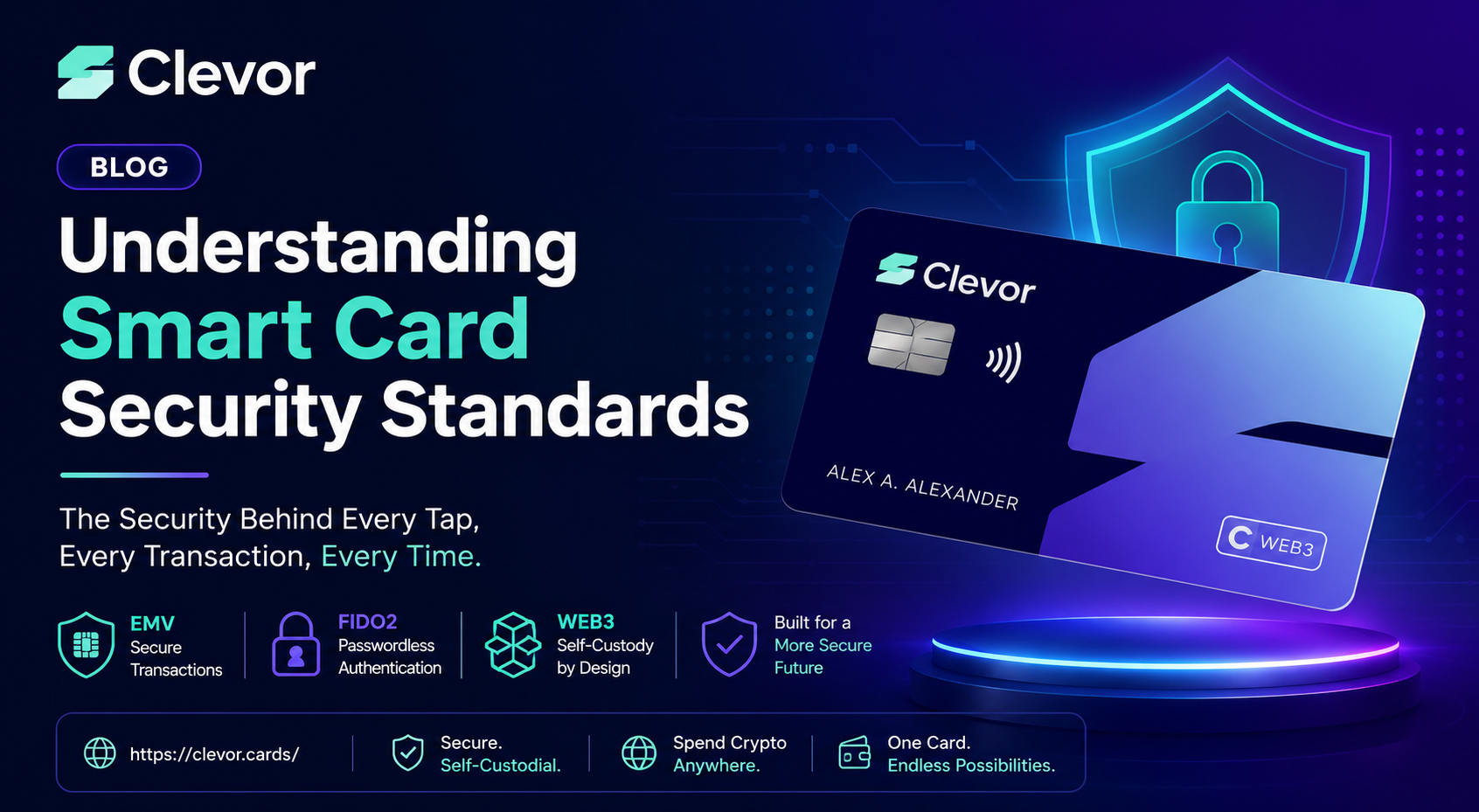
As digital payments and decentralized finance continue to evolve, smart card security standards have become more important than ever. Modern payment cards are no longer limited to simple transactions — they now combine banking, identity verification, and blockchain technology into one secure ecosystem. Platforms like Clevor Cards are helping redefine this space by integrating Web3 functionality with advanced card security systems.
What Are Smart Card Security Standards?
Smart card security standards are globally recognized protocols designed to protect cardholder data, transactions, and authentication processes. These standards ensure that payment cards, authentication cards, and blockchain-enabled cards remain secure against fraud, cloning, hacking, and unauthorized access.
Traditional banking cards use EMV chip technology, while modern blockchain-enabled cards now combine cryptographic security with decentralized asset management.
Today’s advanced Crypto smartcard solutions integrate multiple layers of protection, including encryption, biometric authentication, secure key storage, and decentralized identity verification.
Key Security Standards Used in Smart Cards
EMV Security Standard
EMV (Europay, Mastercard, and Visa) is one of the most widely used smart card security standards worldwide. It uses embedded microchips to generate unique transaction codes for every payment, significantly reducing card cloning and fraud risks.
According to the uploaded Clevor documentation, the platform combines EMV functionality with blockchain integration to enable secure digital transactions.
FIDO2 Authentication Standard
FIDO2 is a passwordless authentication framework that enables highly secure login experiences. Instead of relying on traditional passwords, FIDO2 uses cryptographic authentication methods that are resistant to phishing attacks and credential theft.
The uploaded document highlights how Clevor integrates FIDO2 functionality for secure online authentication and passwordless access.
This makes modern Self-custodial wallet card technology far more secure than conventional authentication systems.
Web3 Security Integration
Web3 security standards focus on decentralized ownership and self-custody. Unlike centralized banking systems, Web3-based cards allow users to maintain direct control over their private keys and digital assets.
The Clevor ecosystem introduces a secure Web3 hardware wallet that enables on-chain transaction signing directly from the card without exposing private keys.
This architecture minimizes the risks associated with centralized exchanges and software wallets.
Hardware-Based Cryptographic Protection
Modern smart cards use secure hardware elements to store cryptographic credentials safely. These tamper-resistant chips are designed to prevent:
- Private key extraction
- Unauthorized access
- Physical tampering
- Data interception
- Card cloning
The uploaded material explains that private keys never leave the card environment, ensuring users maintain full control over their assets.
Crypto Debit Card Security
As crypto adoption grows, security standards for crypto payment cards are becoming increasingly sophisticated. A secure Crypto debit card should include:
- End-to-end encryption
- Secure transaction signing
- Multi-layer authentication
- Compliance with EMV standards
- Blockchain transaction validation
- Fraud monitoring systems
The Clevor Card also supports crypto-to-fiat conversion functionality for real-world payments using Mastercard or Visa infrastructure.
Why Smart Card Security Standards Matter
Security standards are essential because they:
- Protect user funds and identities
- Prevent unauthorized transactions
- Reduce fraud and phishing risks
- Improve trust in digital finance ecosystems
- Enable safer Web3 adoption
- Ensure compliance with international payment regulations
Without strong security standards, digital assets and payment systems remain vulnerable to cyberattacks and identity theft.
The Future of Secure Smart Cards
The future of smart card technology lies in combining traditional financial infrastructure with decentralized Web3 security models. As blockchain adoption continues to expand, hybrid cards that merge banking, crypto, identity authentication, and self-custody will likely become mainstream.
Innovative platforms like Clevor Cards are already demonstrating how secure smart card ecosystems can bridge traditional finance and decentralized finance into one seamless experience.

