


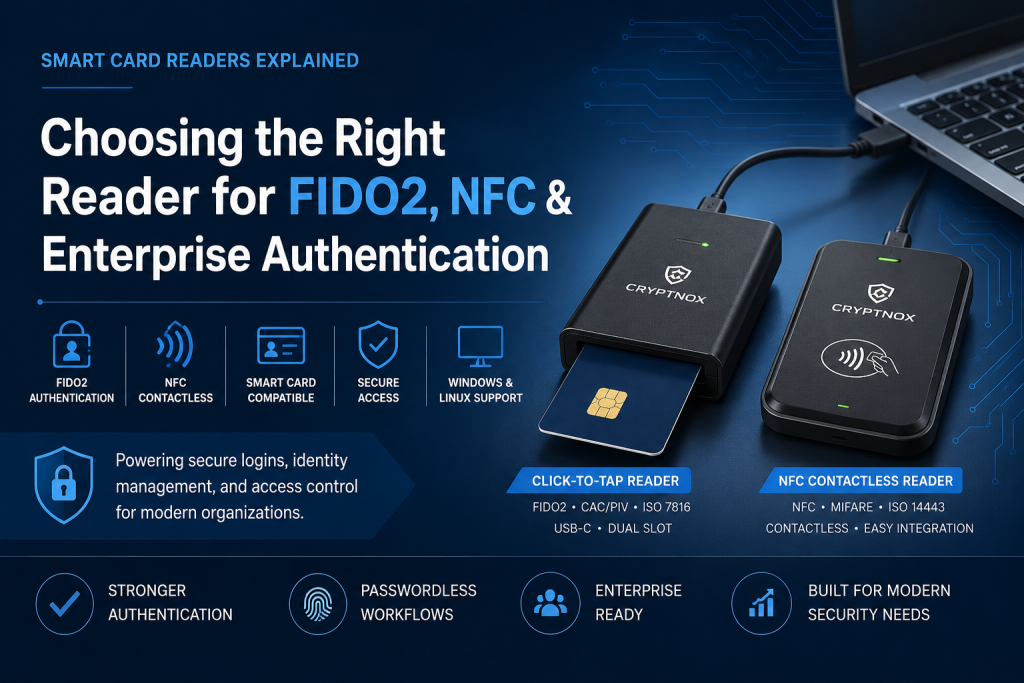
As organizations continue to strengthen their cybersecurity strategies, smart card technology is playing an increasingly important role in identity verification, secure authentication, and access management. Whether supporting FIDO2 security keys, NFC-enabled credentials, CAC/PIV cards, or enterprise authentication workflows, smart card readers have become essential components of modern security infrastructure.
With the rise of passwordless authentication and hardware-based security, IT administrators and security professionals must understand the different types of smart card readers available and how they fit into enterprise environments.
What Is a Smart Card Reader?
A smart card reader is a hardware device that enables communication between a computer, system, or application and a smart card containing secure credentials. These readers are commonly used for authentication, access control, identity verification, and secure login workflows.
Smart card readers support various technologies, including:
- FIDO2 authentication
- NFC communication
- MIFARE credentials
- ISO 14443 contactless cards
- ISO 7816 contact cards
- CAC and PIV identity cards
By facilitating secure communication between cards and systems, smart card readers help organizations implement stronger security controls while improving user convenience.
Why Smart Card Readers Matter in Modern Authentication
Passwords remain one of the weakest links in cybersecurity. As organizations move toward passwordless authentication, hardware-based credentials are becoming increasingly popular.
Smart card readers enable:
- Stronger user authentication
- Phishing-resistant login processes
- Secure access control
- Identity verification
- Multi-factor authentication (MFA)
- Compliance with security frameworks
For organizations adopting FIDO2 security keys and smart card-based identity systems, reader infrastructure is a critical component of successful deployment.
Understanding Contact and Contactless Readers
Smart card readers generally fall into two categories.
Contact Readers
Contact readers require physical insertion of the smart card into the device.
These readers are commonly used for:
- Enterprise authentication
- Government identity cards
- CAC/PIV deployments
- Secure workstation access
- FIDO2 desktop authentication
Organizations seeking a dedicated Cryptnox smart card reader can benefit from solutions designed for secure desktop authentication workflows and smart card integration.
Contactless Readers
Contactless readers use NFC technology to communicate with cards without physical insertion.
These readers are ideal for:
- Access control systems
- Mobile authentication
- Employee badge verification
- NFC credential management
- MIFARE card deployments
A dedicated Cryptnox NFC reader can simplify contactless authentication workflows while supporting modern identity systems.
FIDO2 Authentication and Smart Card Readers
The growth of FIDO2 authentication has increased demand for reliable smart card reader solutions.
FIDO2 helps organizations:
- Eliminate passwords
- Reduce phishing risks
- Improve user experience
- Strengthen identity protection
To support these deployments, organizations often require a compatible FIDO2 card reader capable of handling authentication requests securely.
Smart card readers help bridge the gap between physical security credentials and digital identity systems.
Benefits of USB-C Smart Card Readers
Many modern organizations are transitioning to USB-C infrastructure.
Advantages include:
- Improved compatibility with modern devices
- Simplified workstation deployment
- Faster hardware integration
- Reduced cable management challenges
A dual-slot USB-C smart card reader can provide flexibility for organizations managing multiple card technologies across different authentication environments.
NFC Readers and Access Control Systems
NFC technology has transformed how organizations manage physical and digital access.
Common applications include:
- Building access systems
- Employee ID verification
- Visitor management
- Secure workstation login
- Mobile credential authentication
An enterprise-grade contactless smart card reader allows organizations to streamline credential verification while improving security and convenience.
As mobile-first authentication becomes more common, NFC reader adoption is expected to continue growing.
Windows and Linux Authentication Workflows
Many organizations operate mixed operating system environments.
Smart card readers can support authentication workflows across:
Windows Environments
- Active Directory integration
- FIDO2 deployments
- Enterprise MFA
- Secure workstation access
Linux Environments
- Administrative authentication
- Secure shell access
- Developer environments
- Identity management systems
Reliable smart card reader hardware ensures consistent authentication experiences regardless of operating system.
Choosing the Right Smart Card Reader
When evaluating reader solutions, IT teams should consider:
Compatibility
Ensure support for relevant card technologies and authentication standards.
Connectivity
Choose between contact, contactless, or hybrid reader configurations.
Security Requirements
Consider enterprise authentication, access control, and compliance needs.
Deployment Scale
Evaluate whether the reader will support individual users or large-scale enterprise rollouts.
Future-Proofing
Look for solutions capable of supporting evolving identity and authentication frameworks.
The Future of Smart Card Reader Technology
As organizations continue adopting passwordless authentication and hardware-based identity verification, smart card readers will play an increasingly important role.
Emerging trends include:
- FIDO2 expansion
- NFC-based authentication
- Digital identity initiatives
- Zero-trust security frameworks
- Smart credential ecosystems
Organizations investing in secure reader infrastructure today will be better positioned to support future authentication requirements.
Conclusion
Smart card readers are essential tools for modern authentication, identity management, and access control. Whether supporting FIDO2 security keys, NFC credentials, or enterprise authentication systems, selecting the right reader can significantly improve security and user experience.
Solutions such as the Cryptnox Click-to-Tap reader and Cryptnox NFC reader demonstrate how dedicated reader hardware can support a wide range of authentication workflows while helping organizations build stronger and more resilient security infrastructures.
