


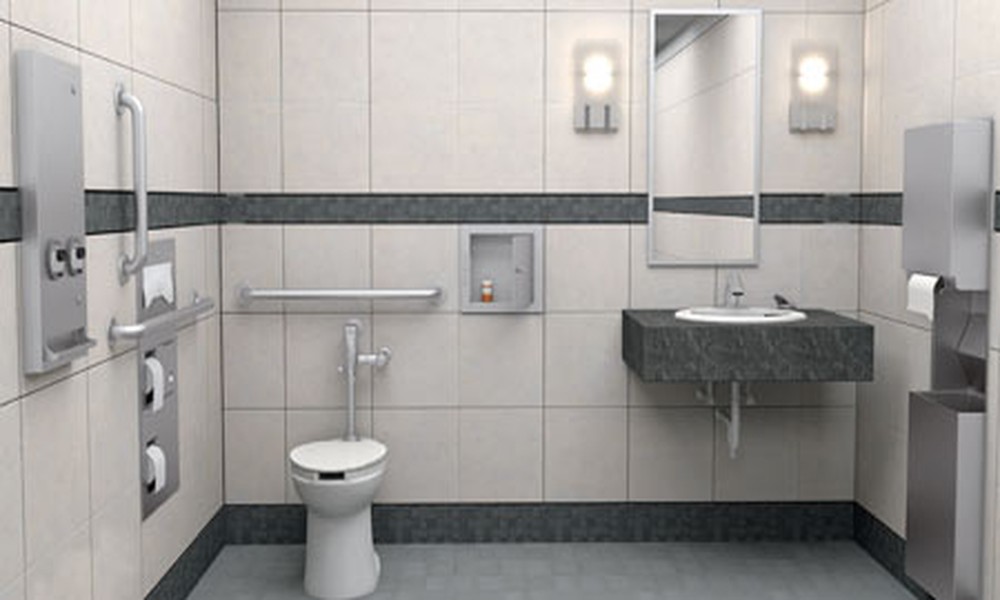
Healthcare facility restrooms present design and specification challenges that significantly exceed those of commercial office or retail environments. Infection control requirements, accessibility needs for patients with mobility limitations, and the specialized demands of clinical environments create a specification complexity requiring careful coordination between architects, infection preventionists, and facility managers.
The Centers for Disease Control’s Healthcare Infection Control Practices Advisory Committee provides guidance on restroom and handwashing facility design that directly affects accessory specification decisions in clinical settings.
How Infection Control Requirements Shape Fixture Selection
Touchless operation is the infection control standard for healthcare restroom accessories, covering paper towel dispensers, soap dispensers, and where feasible, toilet flush mechanisms. Sensor-operated accessories eliminate high-touch surface contact points that research has identified as fomite transmission sites for healthcare-associated infections.
Surface cleanability is a parallel concern in healthcare settings where cleaning frequencies and chemical concentrations are substantially higher than in commercial environments. Accessories with complex surface geometries or materials that degrade under repeated disinfectant exposure create cleaning challenges that compromise infection control outcomes regardless of cleaning frequency.
What Bariatric and High-Weight-Capacity Requirements Mean for Specification
Healthcare facility grab bars and shower seats must meet weight capacity requirements that exceed standard residential or commercial specifications. ANSI A117.1 healthcare grab bar standards require 250-pound minimum load capacity, and bariatric-designated facilities may require up to 750-pound specifications. Sourcing restroom accessories for commercial facilities from manufacturers with documented testing certifications for high-capacity healthcare applications ensures that installed fixtures meet the actual load requirements of the patient population served.
How Patient Safety Standards Affect Fixture Design Requirements
Ligature-resistance is a required design feature for mental health and psychiatric facility restroom accessories, eliminating any design element that could be used as an anchor point. This requirement extends to paper towel dispensers, toilet paper holders, soap dispensers, and grab bars, requiring purpose-designed healthcare-specific fixtures.
What Maintenance Access Requirements Mean for Healthcare Installations
Accessories installed in healthcare environments must be serviceable without requiring facility shutdown or patient area closure. Designs with front-access servicing, tool-free component replacement, and standardized replacement parts across multiple products reduce the operational impact of routine maintenance and reactive repair events.
Healthcare restroom accessory specification requires expertise in infection control standards, patient safety requirements, accessibility regulations, and durability under intensive cleaning conditions simultaneously. Designers who engage with manufacturer technical representatives early in the design process and specify to verified performance standards produce installations that meet both regulatory requirements and long-term operational needs.

