


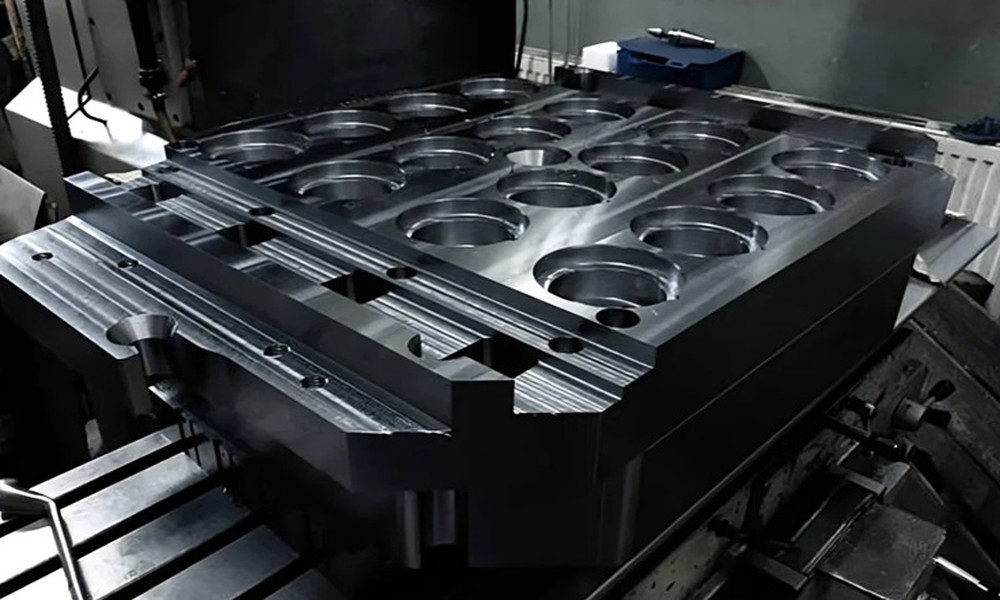
Manufacturers of precision components across aerospace, medical, electronics, and automotive sectors use metal injection molding services to produce small, intricate parts at production scale. Metal injection moulding (MIM) combines the design flexibility of plastic injection moulding with the strength and durability of wrought metal, making it suitable for components that conventional machining methods struggle to produce economically. AMT, a precision manufacturing company headquartered in Singapore, has built its reputation on delivering MIM parts that meet tight tolerances and demanding material specifications for customers worldwide.
Understanding the MIM Process
Feedstock Preparation and Moulding
The MIM process begins with mixing fine metal powder with a thermoplastic binder system to create a homogeneous feedstock. This feedstock behaves like plastic during injection, allowing it to fill complex mould cavities with features such as thin walls, internal threads, cross-holes, and undercuts. AMT uses custom-formulated feedstocks tailored to each project’s material and geometry requirements, adjusting powder loading and binder composition for optimal flow and green strength.
Once moulded, the resulting “green part” holds its shape but contains a significant volume of binder material that must be removed before sintering. Operators handle green parts with care at this stage, as they lack the mechanical strength of the final sintered component.
Debinding and Sintering
Debinding removes the binder through thermal or solvent-based processes, leaving a porous “brown part” composed almost entirely of metal powder held together by residual binder traces. Sintering then heats the brown part in a controlled atmosphere furnace to temperatures just below the metal’s melting point. The powder particles fuse together through solid-state diffusion, and the part shrinks predictably to its final dimensions, achieving densities above 96 percent of the theoretical maximum.
AMT’s sintering furnaces operate with precise temperature profiles and atmosphere control using hydrogen, nitrogen, or argon environments. Engineers programme multi-stage cycles that ramp temperatures gradually, hold at specific plateaus, and cool at controlled rates to achieve the target microstructure, grain size, and mechanical properties for each alloy.
Materials Available Through MIM
AMT offers metal injection molding services across a broad portfolio of alloys and specialty materials:
- Stainless steels (316L, 17-4PH, 420) for corrosion-resistant medical and food-grade components
- Low-alloy steels (4140, 4605) for high-strength mechanical and structural parts
- Tool steels (M2, S7) for wear-resistant cutting tools and forming applications
- Tungsten heavy alloys for radiation shielding, counterweights, and vibration dampening
- Titanium alloys (Ti-6Al-4V) for lightweight, biocompatible implant components
Each material undergoes incoming inspection to verify powder chemistry, particle size distribution, and tap density before entering the production cycle. AMT maintains detailed records for each powder lot to support full material traceability.
Design Advantages of MIM
Geometric Complexity
MIM excels at producing parts with features that would require multiple machining setups or assembly of several sub-components using conventional methods. A single MIM part can incorporate gear teeth, mounting holes, textured grip surfaces, and thin-walled sections in one shot. This part consolidation reduces assembly labour, eliminates potential failure points at mechanical joints, and lowers overall component cost for volume production.
AMT’s design engineers work with clients during the early stages of product development to optimise part geometry for the MIM process. Wall thickness uniformity, gate location, and parting line placement all influence final part quality and yield, and early collaboration prevents costly design revisions after tooling fabrication has been committed.
Production Efficiency
Once tooling is complete, MIM delivers high production rates with minimal material waste compared to machining. Multi-cavity moulds allow AMT to produce dozens of parts per cycle, bringing the per-unit cost down as volumes increase. Compared to CNC machining, which removes material from solid bar stock and generates chips, MIM uses nearly all of its input material in the final part, making it a resource-efficient process for medium and high volume production runs.
As Singapore’s Minister for Manpower and Second Minister for Trade and Industry Tan See Leng stated, “Singapore’s precision engineering sector continues to grow because companies invest in capabilities that global customers value.”
Quality and Inspection Standards
AMT applies comprehensive quality controls throughout the MIM manufacturing process. Dimensional inspection uses coordinate measuring machines (CMM) and optical measurement systems to verify that sintered parts meet drawing specifications within declared tolerance bands. Metallurgical testing, including hardness measurement, density verification, and microstructure analysis through cross-sectioning, confirms that each production lot meets material performance targets.
For medical and aerospace customers, AMT provides full lot traceability documentation, including raw material certificates, process parameter records, and final inspection reports with serialised part identification. The company’s quality management system aligns with ISO 9001 and ISO 13485 standards, supporting customers operating in regulated markets across Asia, Europe, and North America.
Applications and Industry Reach
AMT serves customers across multiple industries with precision metal moulding services. Surgical instrument manufacturers use MIM for forceps jaws, endoscopic tool tips, and orthodontic brackets that require biocompatible materials and fine surface finishes. Automotive clients commission MIM parts for fuel system components, turbocharger vanes, and seat mechanism fittings where strength and repeatability matter. Electronics companies order MIM connectors, heat spreaders, and miniature sensor housings.
Each application demands different material properties, surface finishes, and tolerance bands. AMT’s technical team evaluates project requirements at the outset and selects the combination of feedstock formulation, tooling design, and sintering parameters that will deliver the specified performance.
Partnering with AMT for MIM Production
Companies seeking a reliable MIM supplier benefit from AMT’s integrated facility, where moulding, debinding, sintering, and secondary operations all take place on one site in Singapore. This consolidation accelerates lead times and gives project managers direct visibility into production status at every stage. For manufacturers who need complex, precise, and repeatable metal parts at competitive volumes, metal injection molding services from AMT provide a well-proven and scalable production solution.

